Cost My Reno field library · 22 guides
Measure, budget, and buy with fewer surprises.
Practical guides that explain the decisions behind the calculators — paint coverage, flooring waste, slab thickness, roof squares, fence spacing, and remodel contingencies. Every guide shows its arithmetic, its purchasing units, and the references behind the conventions.
Painting
3 field guides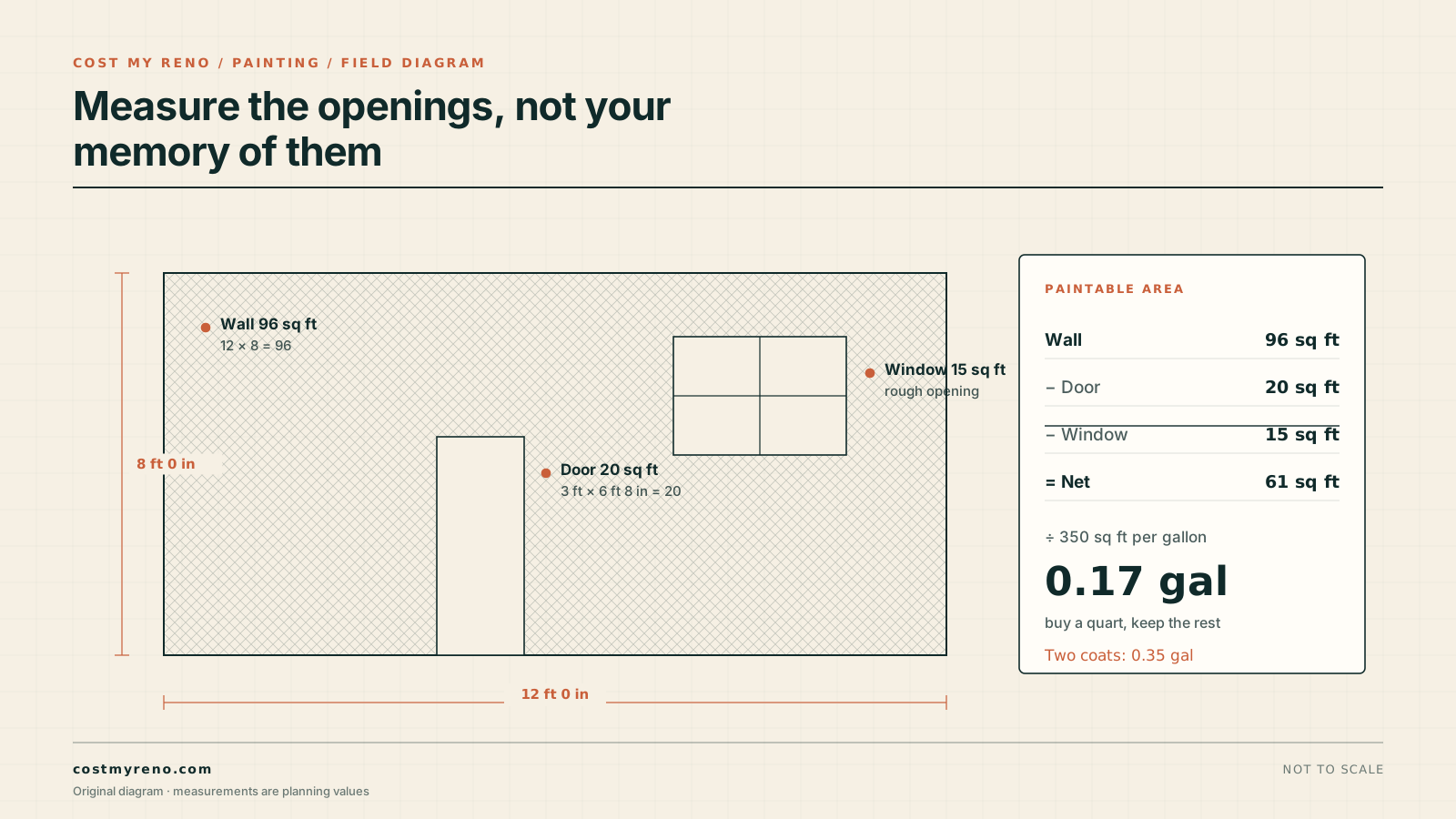 8 min read · Painting
How Much Paint Do I Need? A Room-by-Room Guide
Measure walls, ceilings, trim, doors, and openings, then turn the square footage into gallons you can actually buy.
Read guide →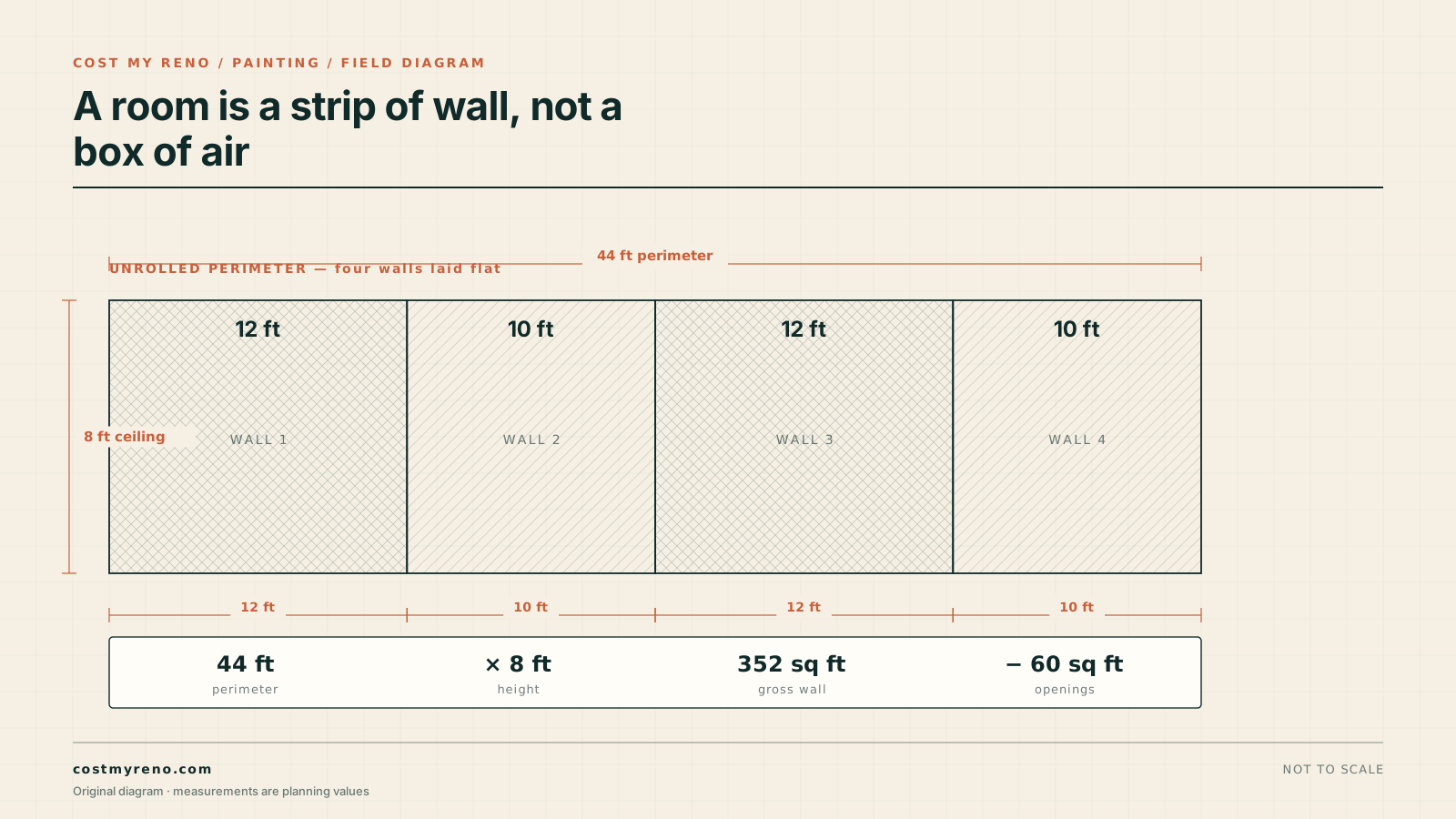 7 min read · Painting
How to Measure Walls, Ceilings, Doors, and Trim for Paint
A field-measurement workflow for irregular rooms, openings, sloped ceilings, and trim, with a surface schedule you can price from.
Read guide →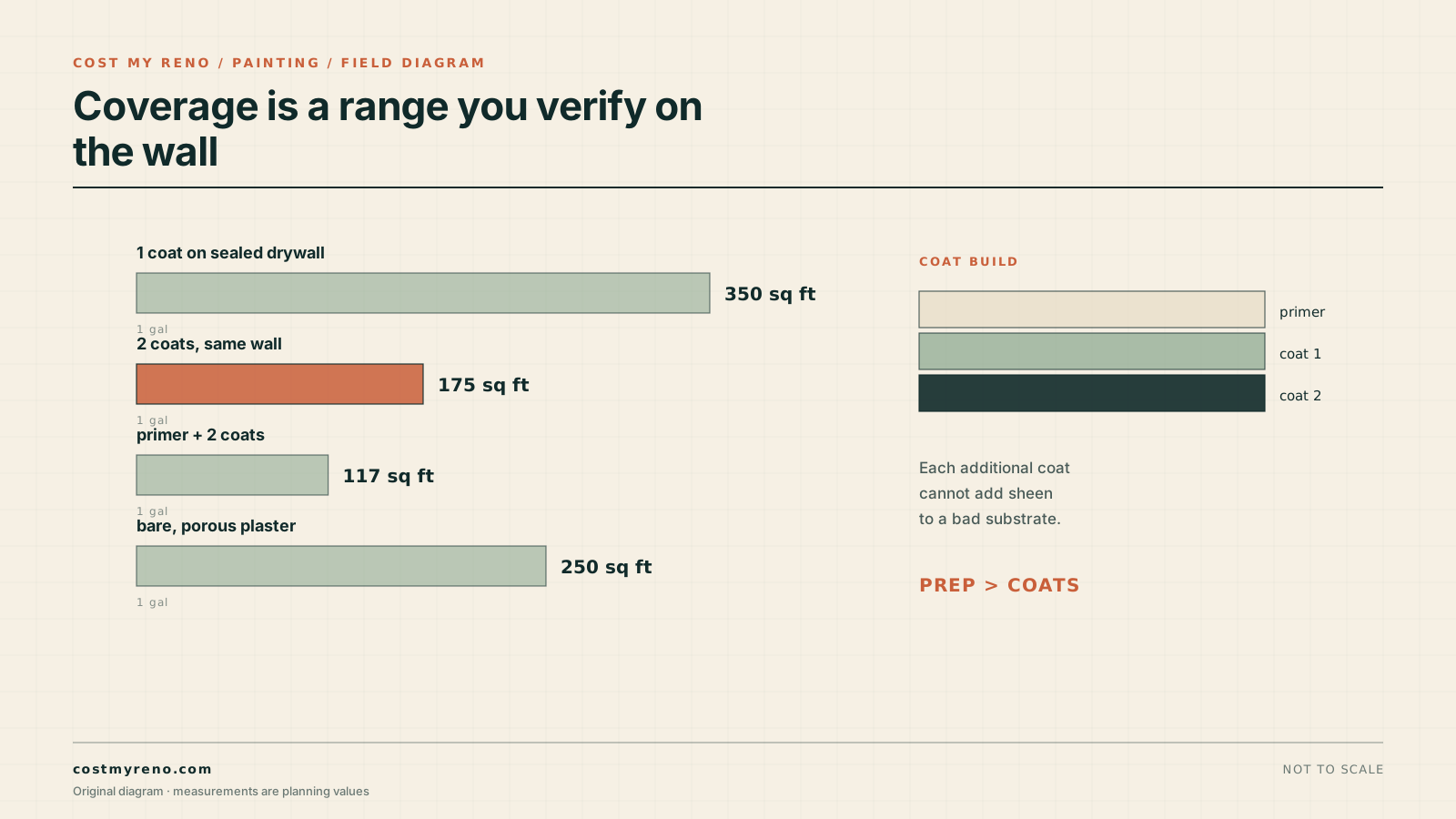 7 min read · Painting
Paint Coverage, Primer, and Number of Coats Explained
Why the same gallon covers different areas on different walls, and how to decide primer and coat counts before you buy.
Read guide →Flooring
4 field guides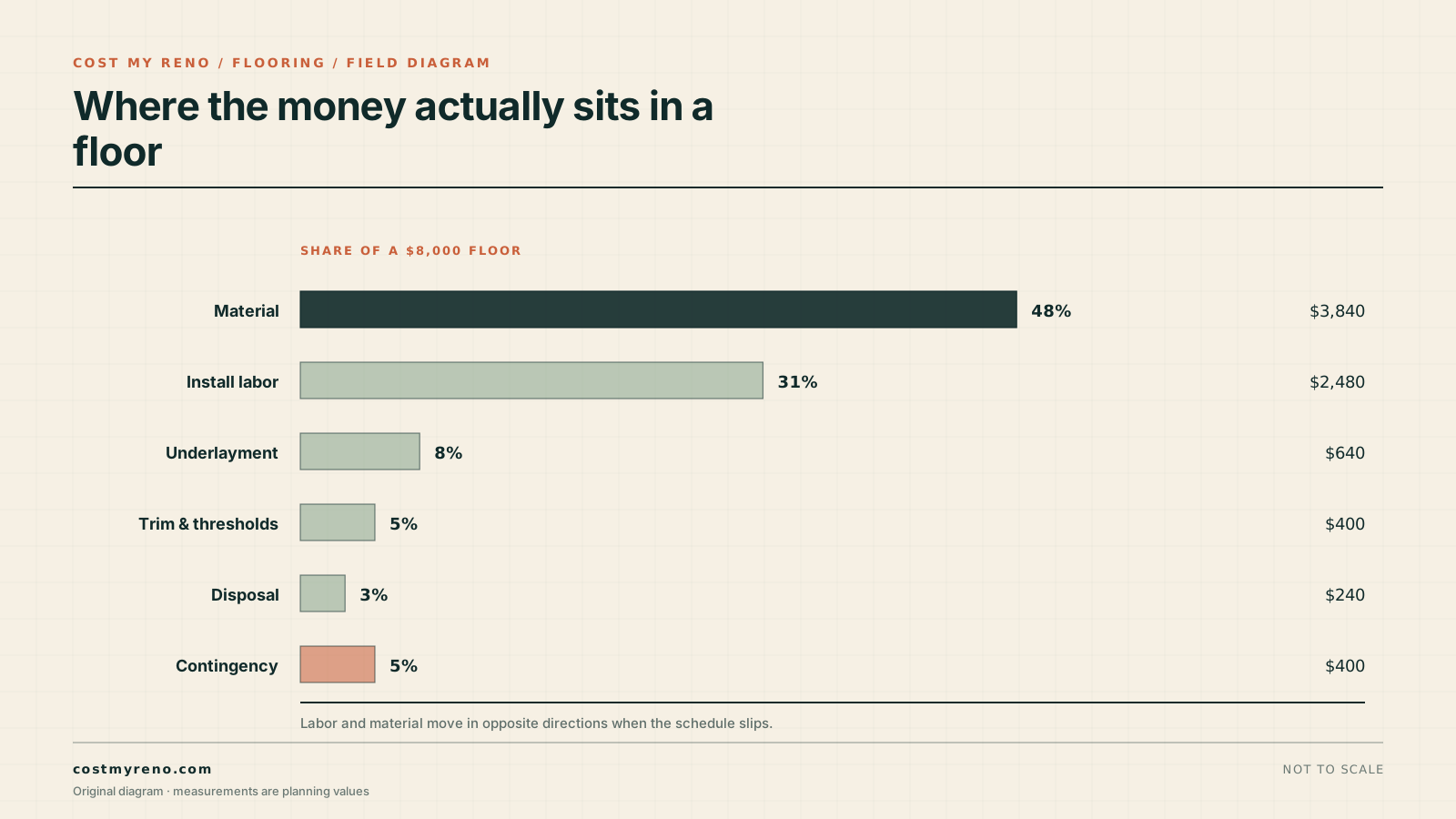 7 min read · Flooring
Flooring Cost Breakdown: Material, Prep, Labor, and Extras
A line-item method for pricing a floor in 2026, with per-square-foot bands by material and the five costs most bids leave out.
Read guide →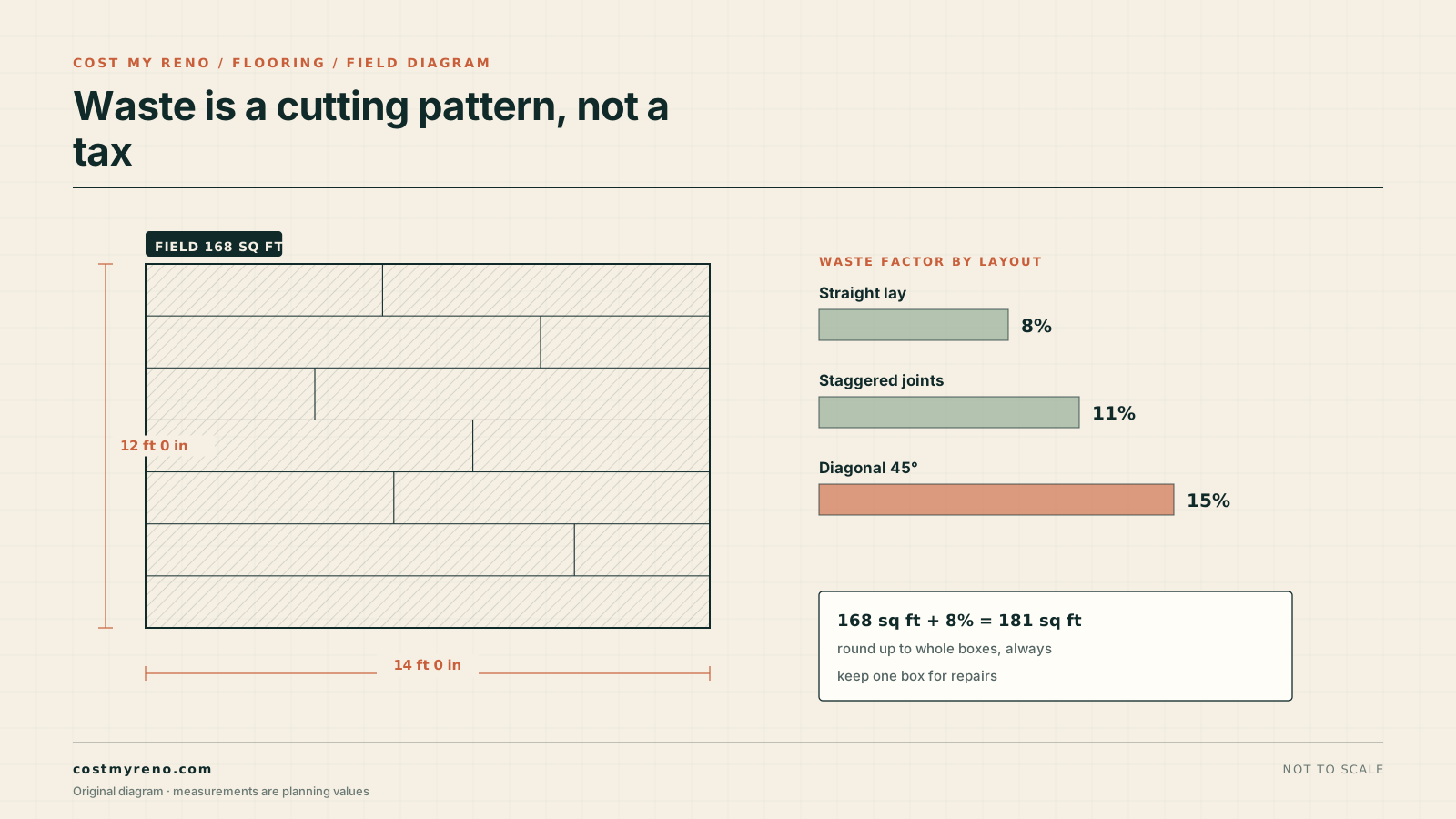 7 min read · Flooring
Flooring Waste Percentage: 5%, 10%, or 15%?
Pick a waste allowance from the cut plan, room geometry, and carton size, with per-layout numbers you can defend to an installer.
Read guide →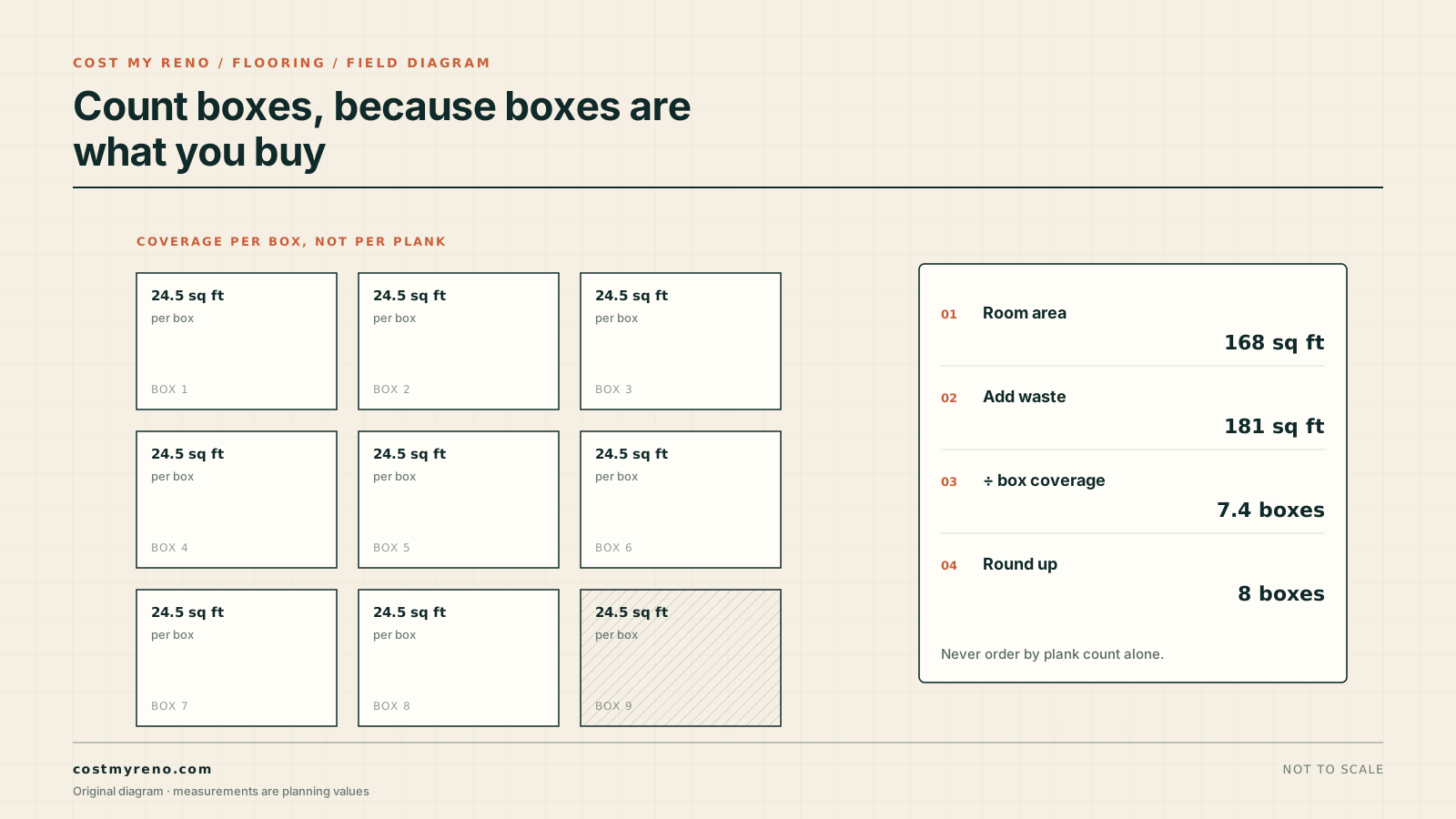 6 min read · Flooring
How to Convert Square Feet Into Flooring Boxes
The four-number method that turns a measured room into a carton count, and the rounding error that sends people back to the store.
Read guide →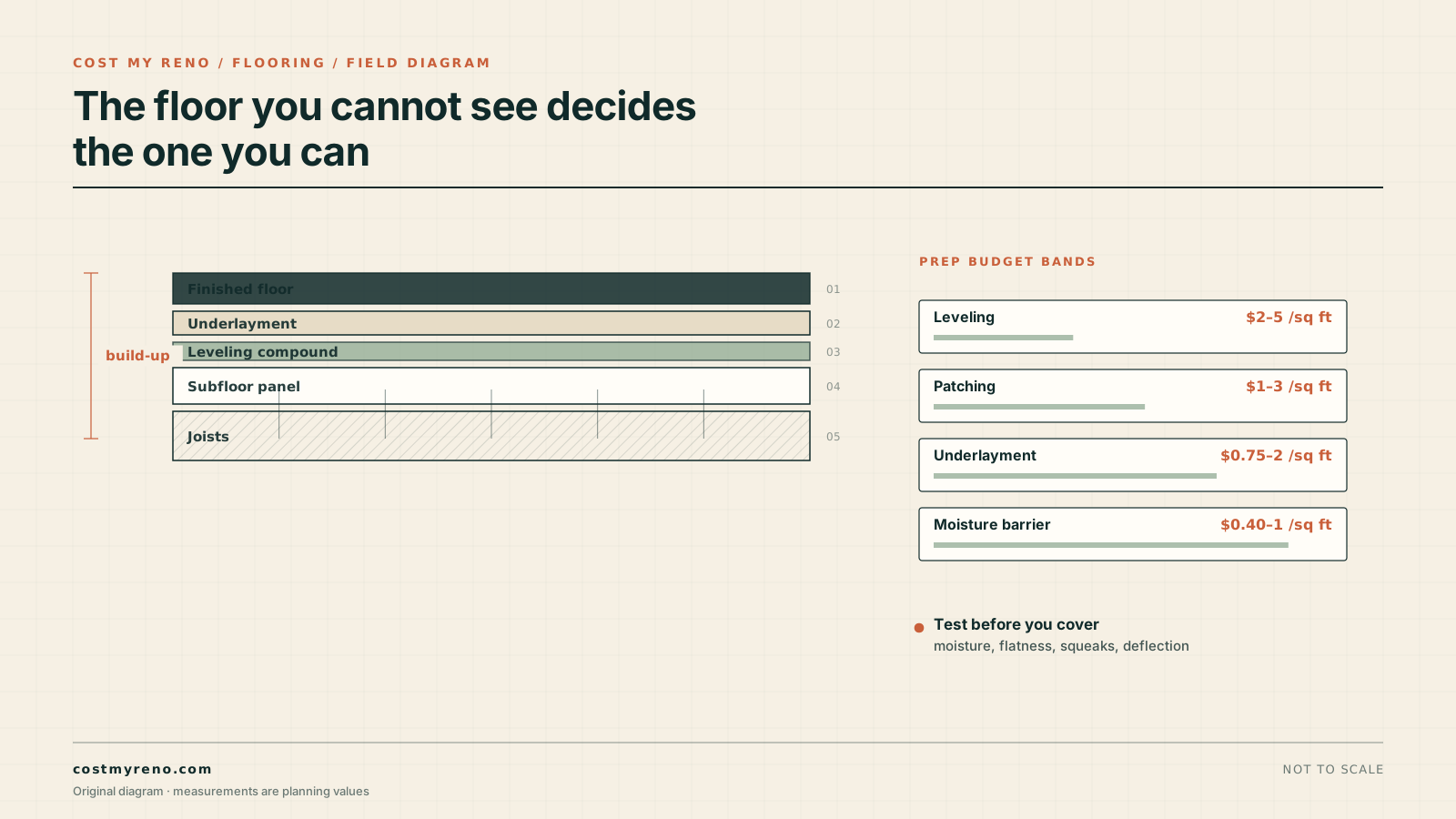 7 min read · Flooring
Subfloor Preparation: What to Inspect and Budget
Flatness, moisture, deflection, and hazardous materials: the four checks that decide whether a flooring quote is complete, with 2026 prep costs.
Read guide →Concrete
3 field guides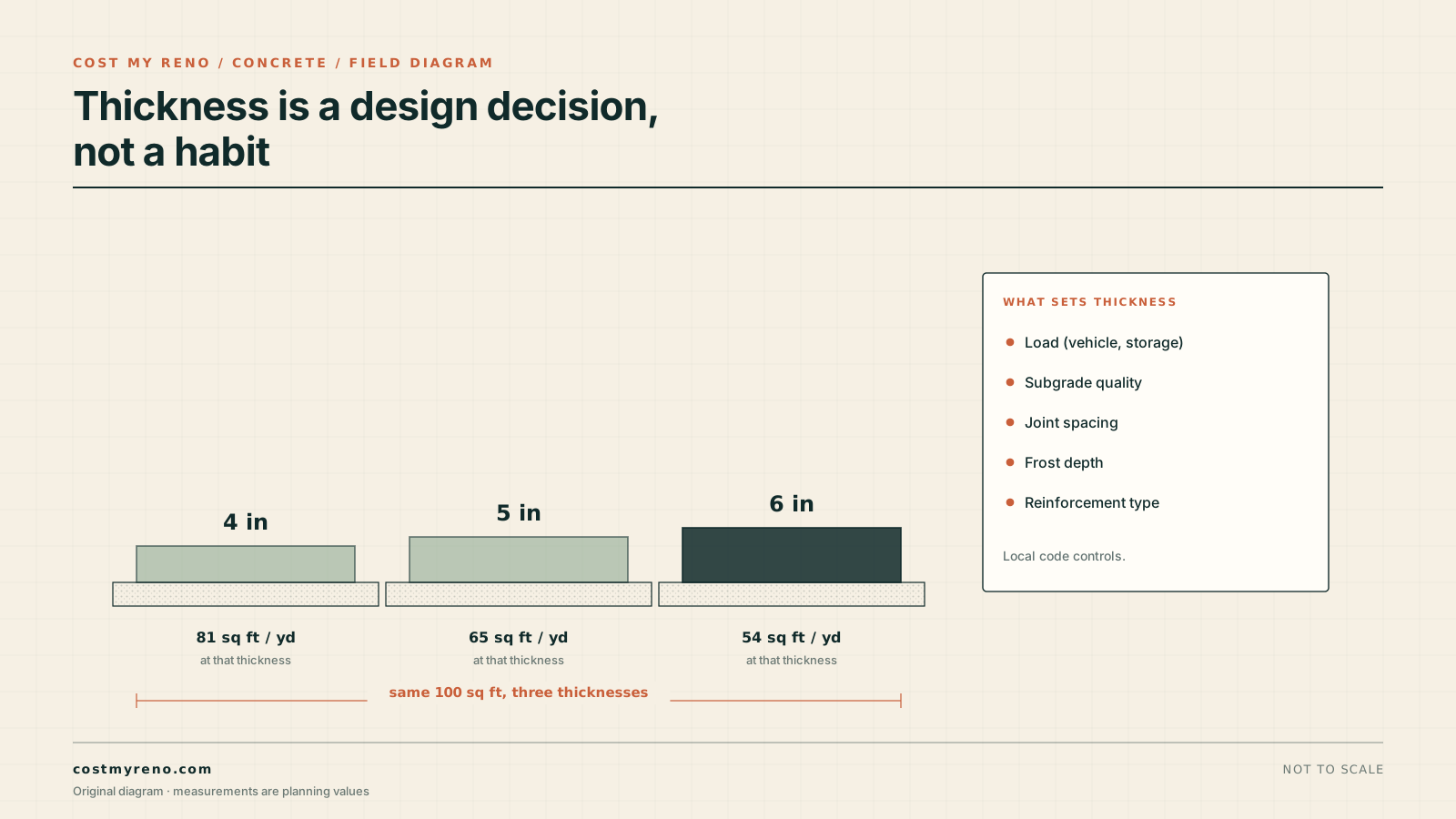 9 min read · Concrete
Concrete Slab Thickness: Choosing 4, 5, or 6 Inches by Load
Match slab thickness to the loads it will actually carry, then check base, joints, reinforcement, and weather before you price a single yard.
Read guide →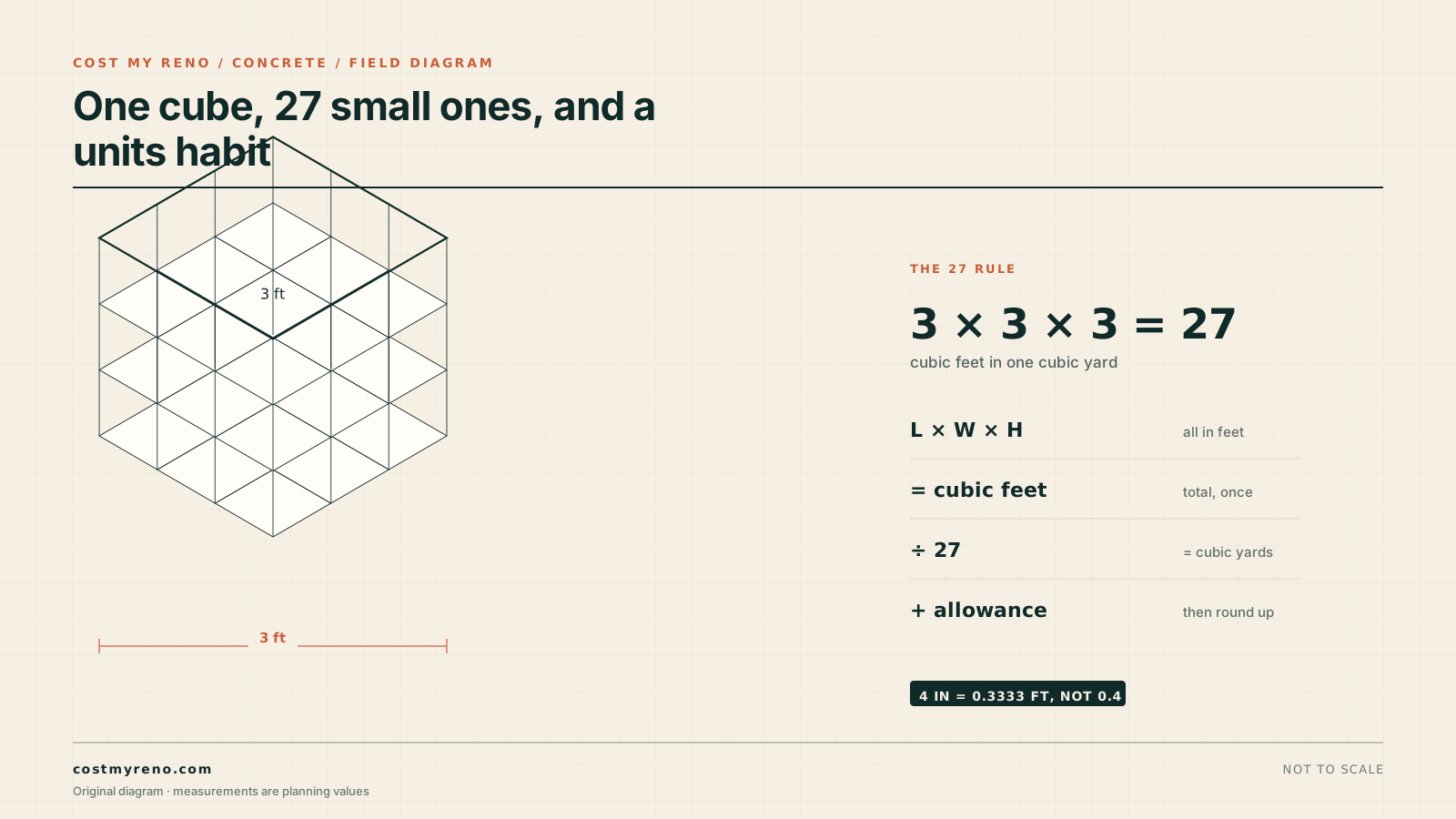 6 min read · Concrete
Cubic Feet to Cubic Yards for Concrete: The 27 Rule, Worked Out
Convert slabs, footings, and odd shapes into cubic yards, avoid the thickness error that inflates an order, and check bag yields before you buy.
Read guide →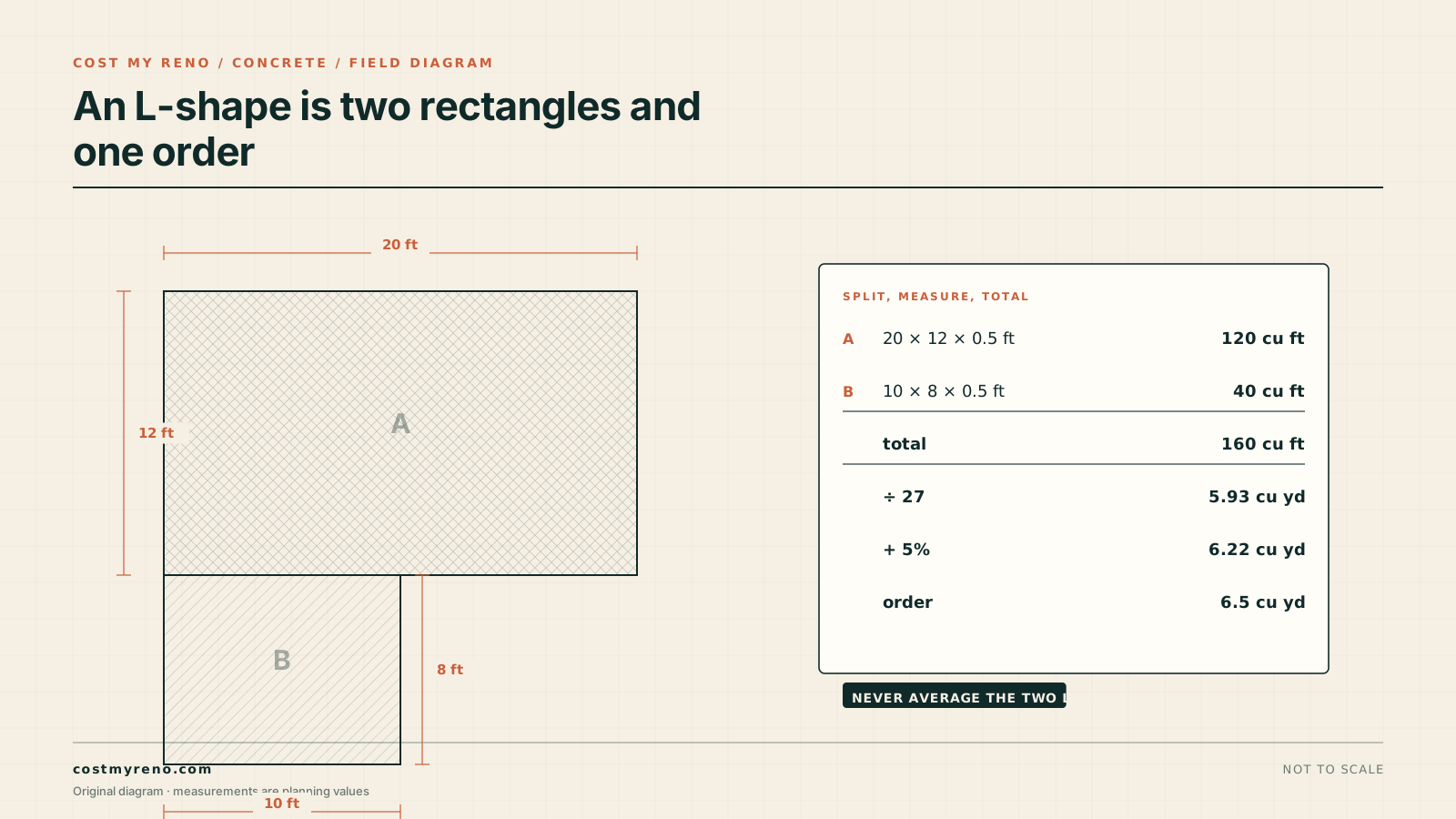 8 min read · Concrete
Ordering Ready-Mix Concrete: Yardage, Fees, and Delivery Day
Build a takeoff the dispatcher can trust, pick an allowance you can defend, and know every fee and access limit before the truck rolls.
Read guide →Drywall
2 field guides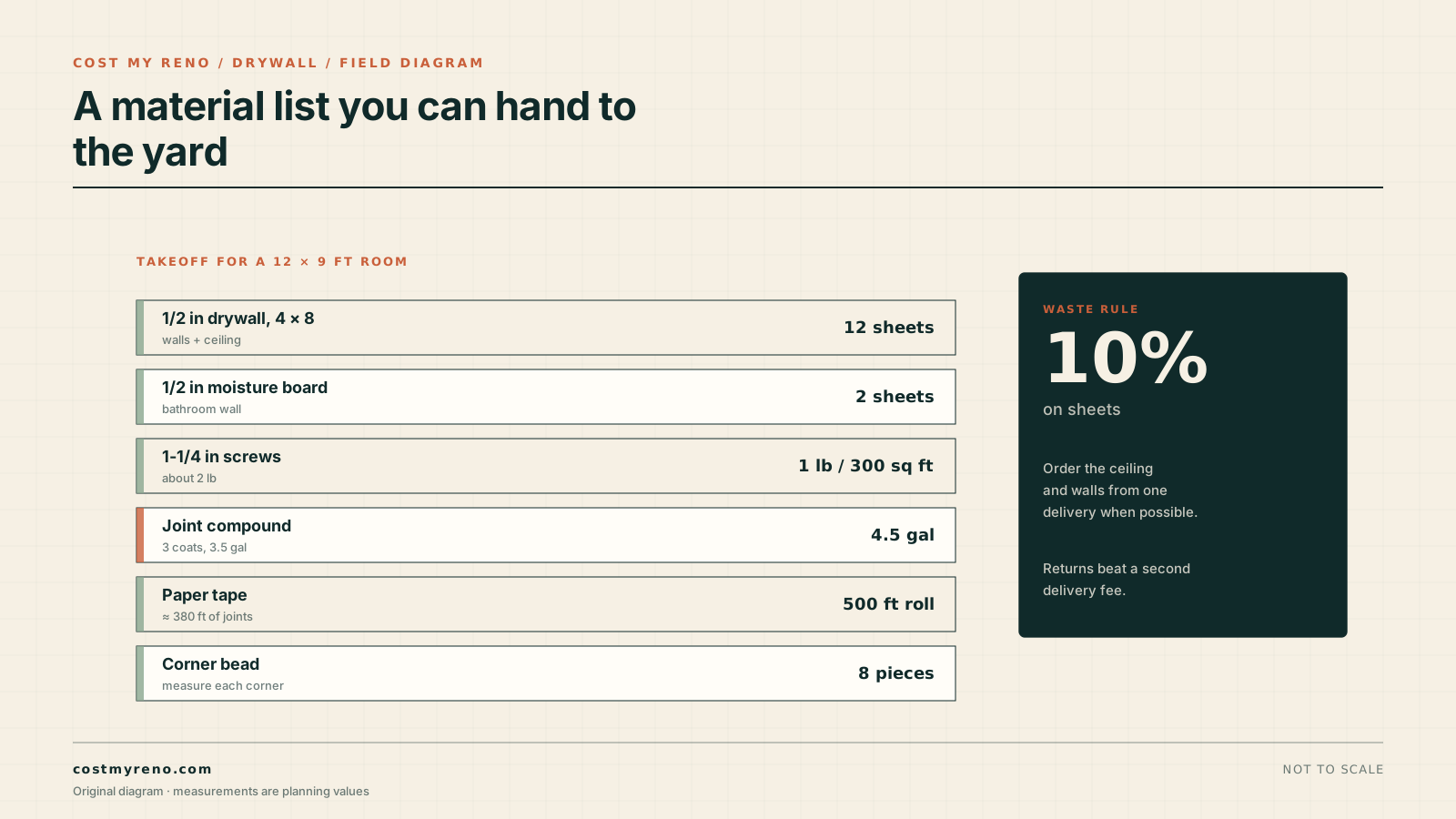 8 min read · Drywall
Drywall Material List: Sheets, Screws, Tape, Compound, and Bead
Turn a square-foot estimate into a complete order that accounts for assembly type, finish level, corners, and the small parts that stop a job.
Read guide →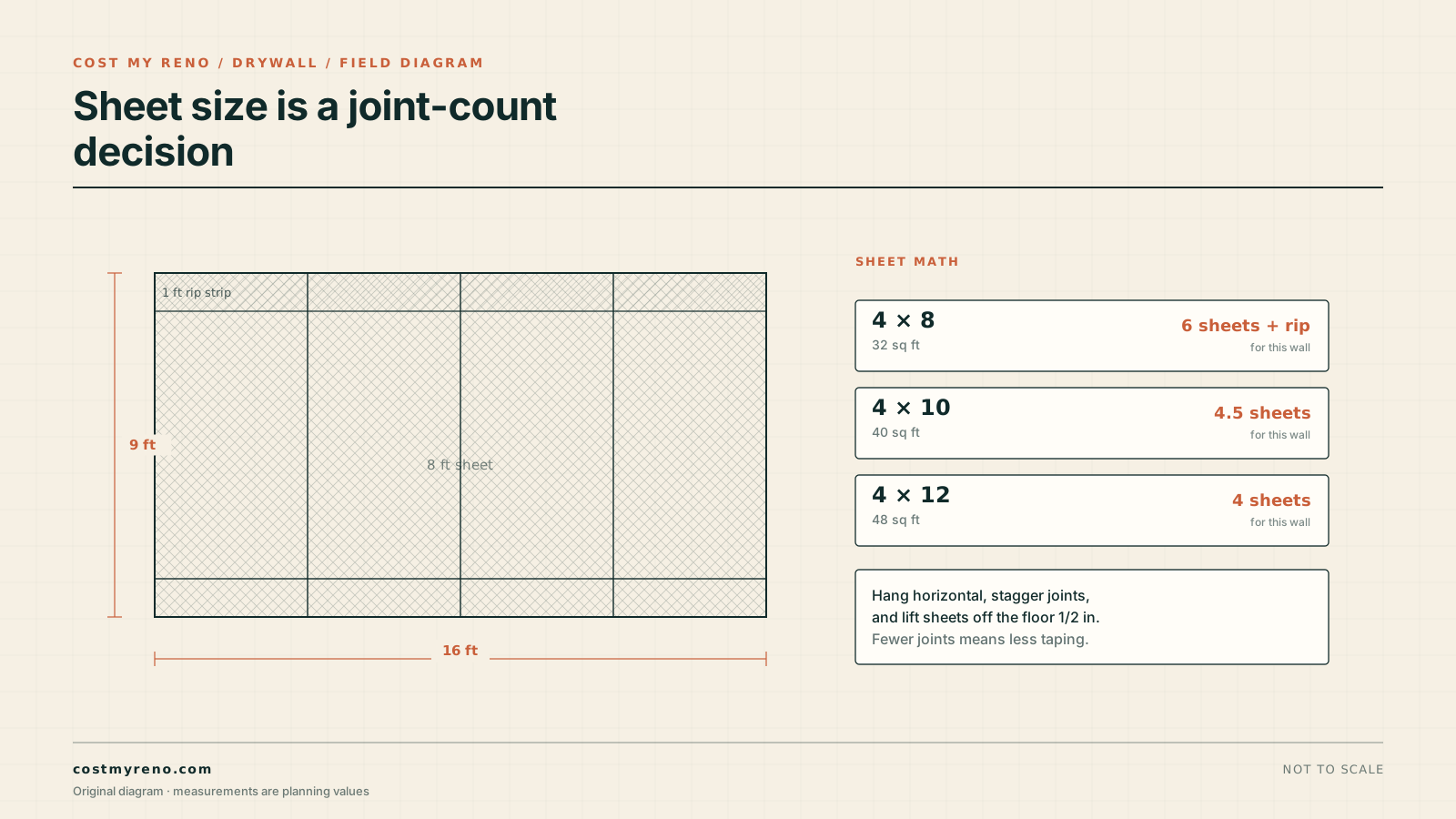 8 min read · Drywall
Drywall Sheet Sizes: 4×8, 4×12, and the Layout Math That Decides
Choose panel length by wall height, joint count, stair access, and crew size, then order the count that the layout actually produces.
Read guide →Roofing
3 field guides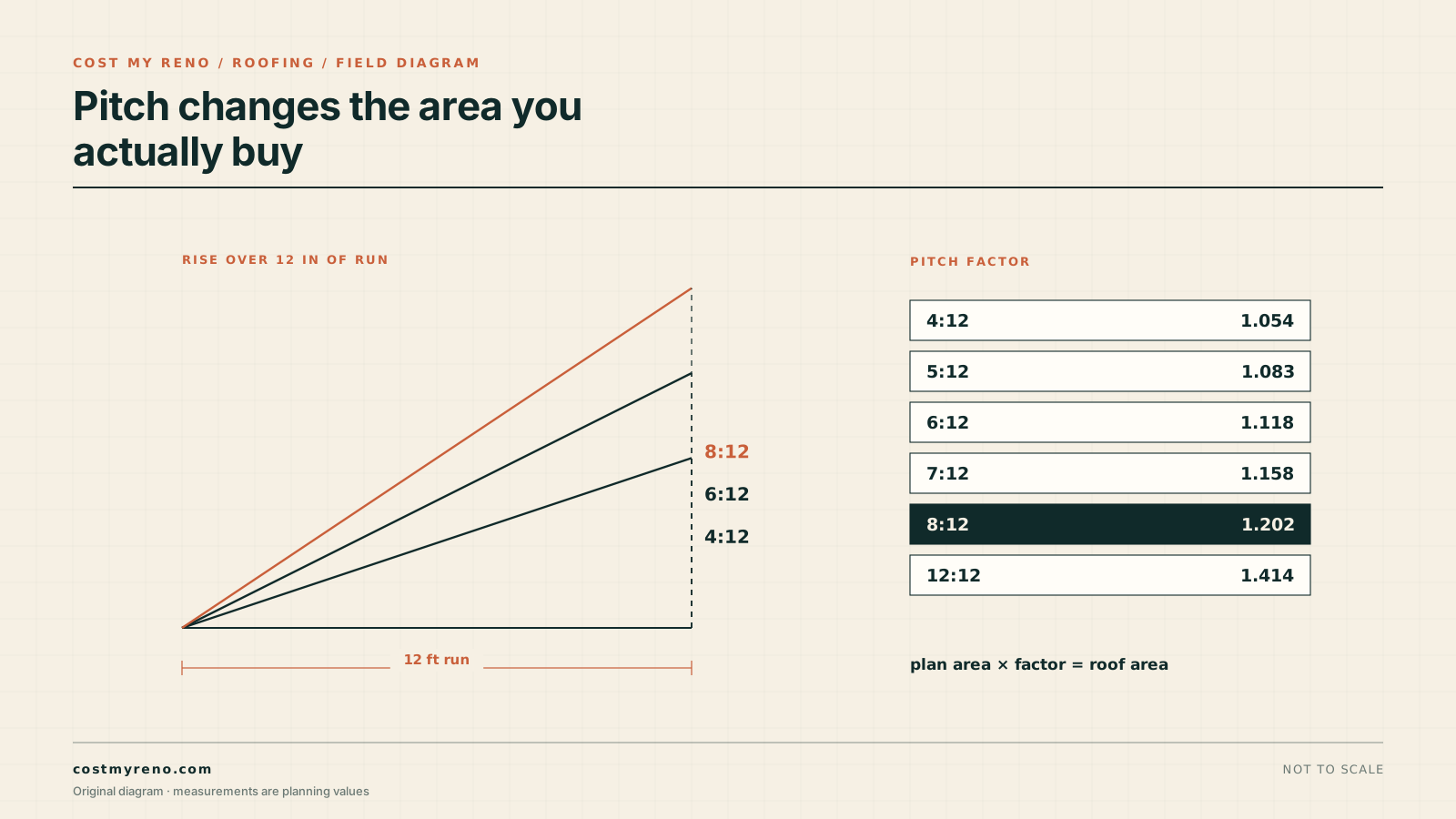 7 min read · Roofing
Roof Pitch Factor Table: 3:12 Through 12:12, With Walkability Notes
Exact pitch multipliers for every common roof slope, with slope angles, surface area per 1,000 sq ft of plan, and what each pitch means for staging, labor, and fall protection.
Read guide →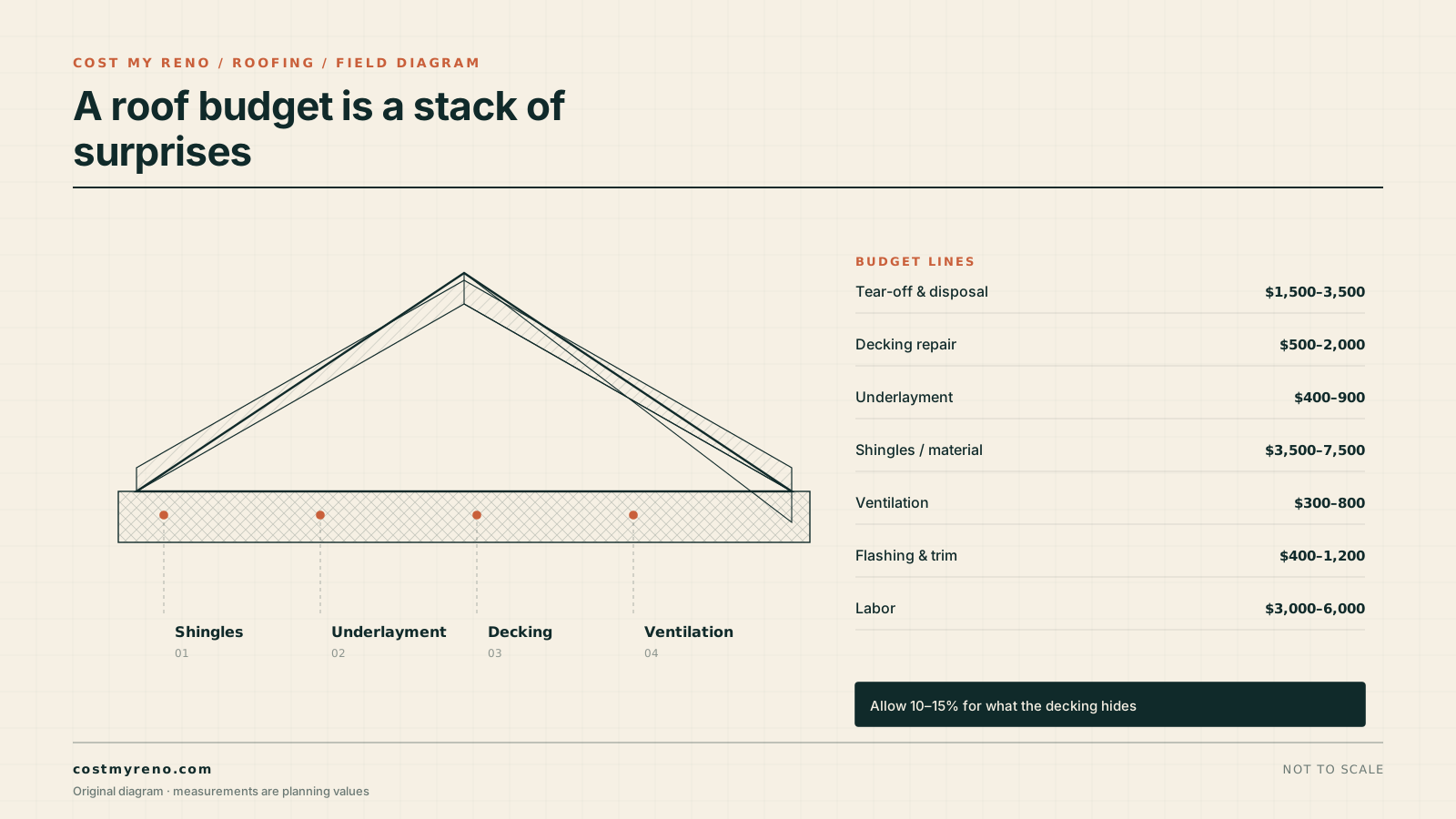 9 min read · Roofing
Roof Replacement Budget Checklist: Line Items, Ranges, and Bid Traps
Build a line-by-line asphalt roof replacement budget covering tear-off, deck repair rules, the weather-control layer, ventilation, permits, and warranty registration.
Read guide →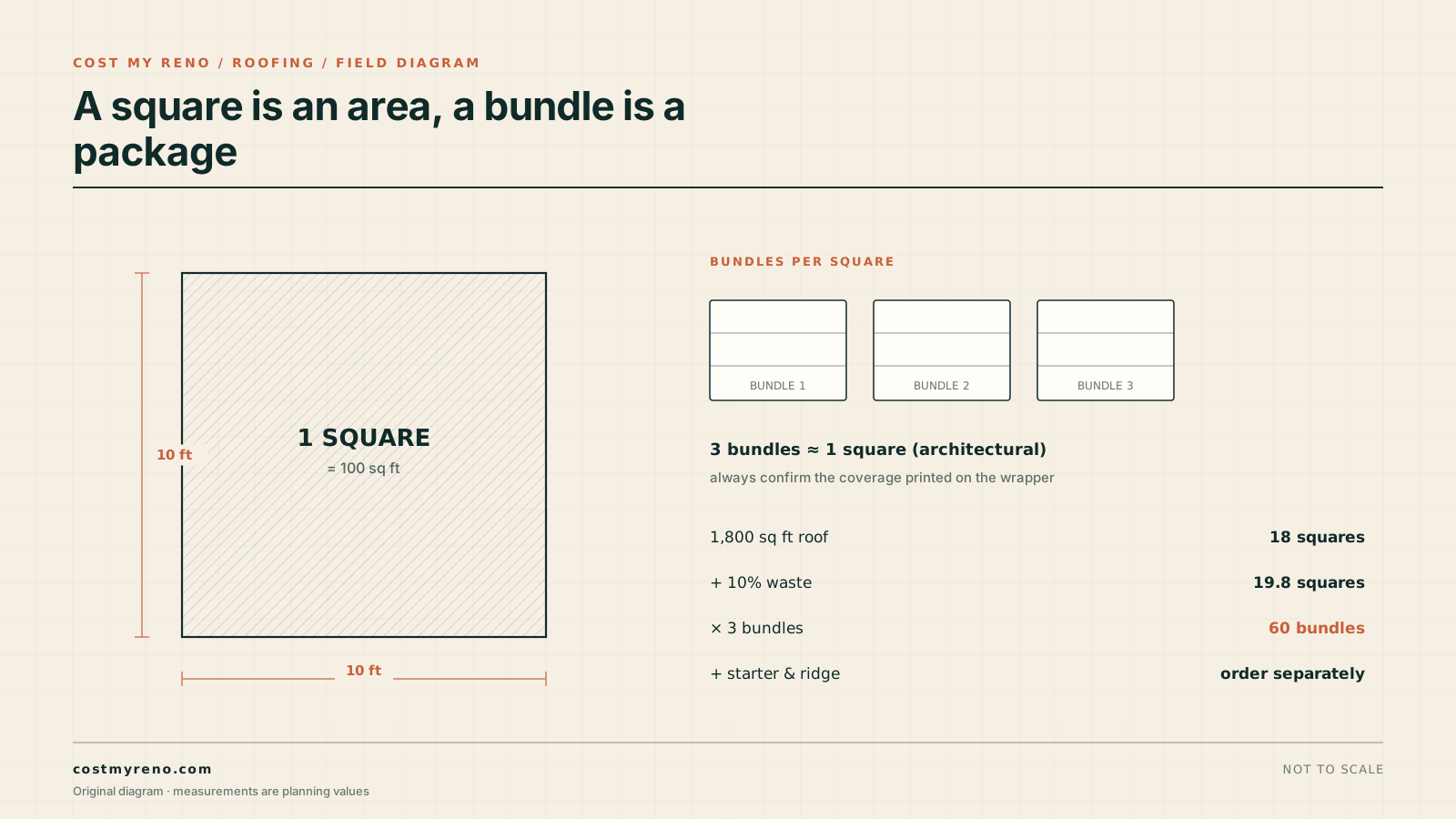 9 min read · Roofing
Roofing Squares and Bundles: Turning a Footprint Into an Order
Convert plan area to roof surface, then to squares, bundles, and accessory quantities using the waste rules and coverage figures an estimator actually works from.
Read guide →Fencing
2 field guides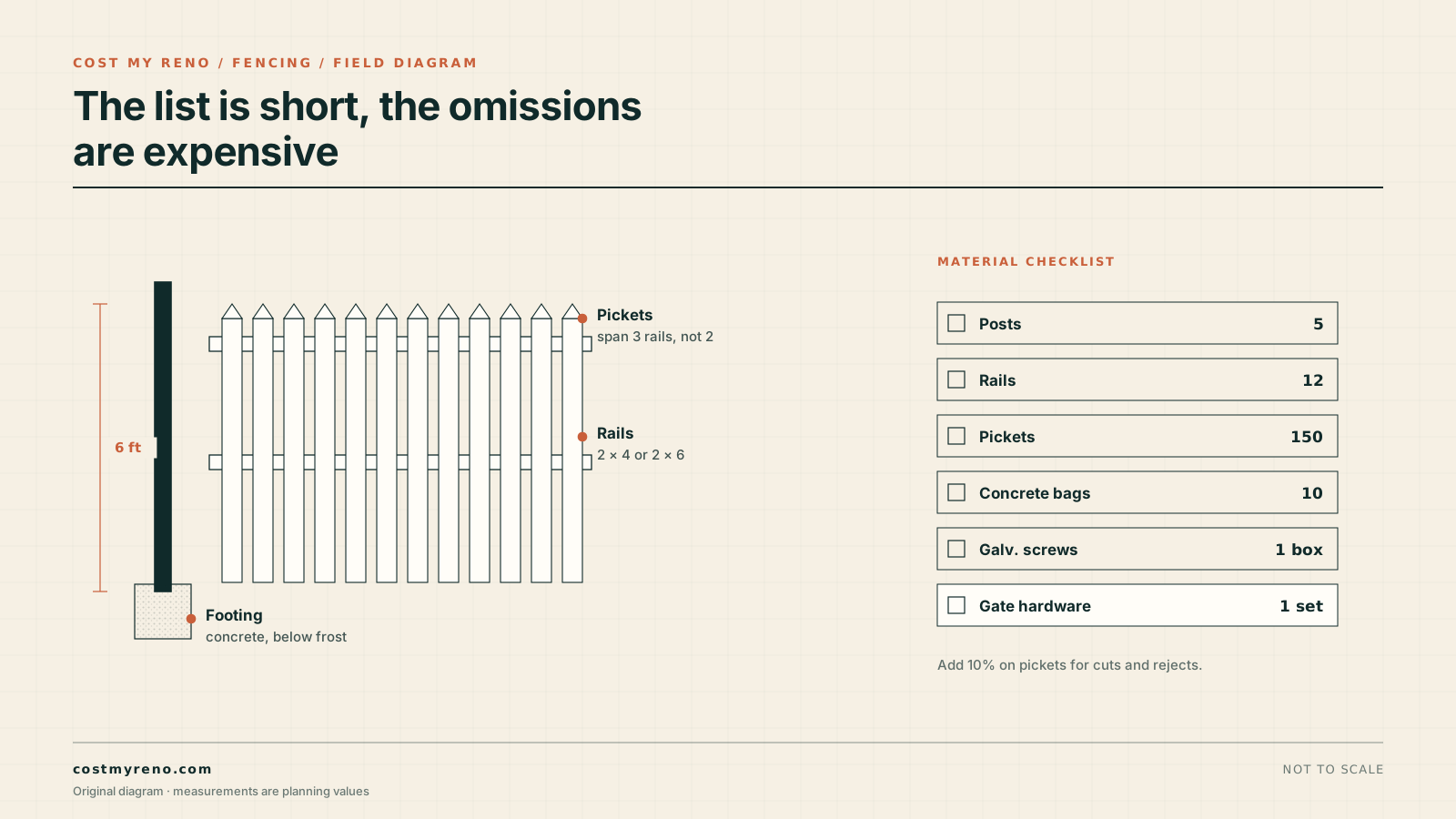 7 min read · Fencing
Fence Material Checklist: Panels, Posts, Gates, Concrete, and Hardware
Turn a measured fence line into a purchasing list with the right post types, footing quantities, and corrosion-compatible hardware.
Read guide →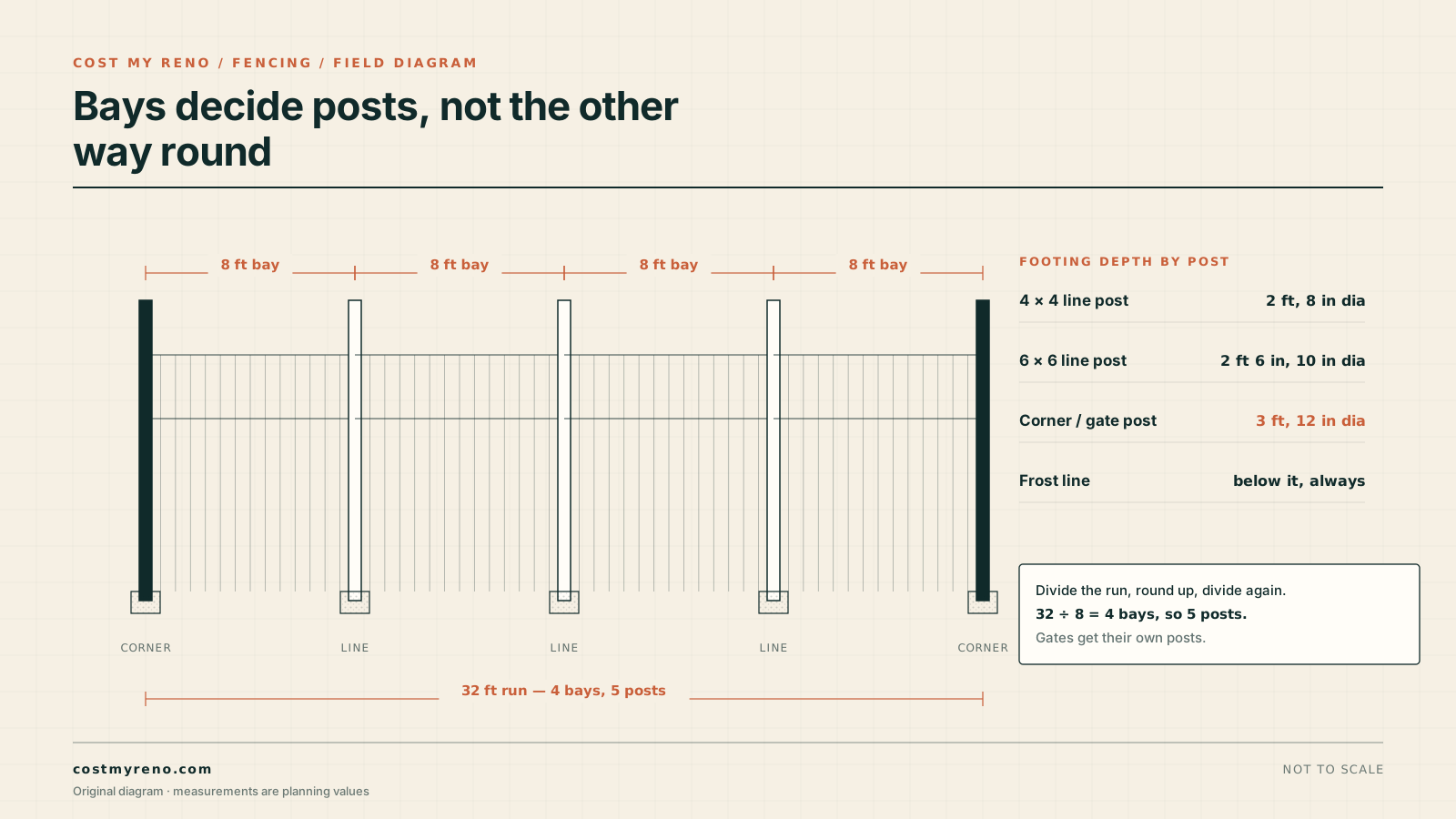 9 min read · Fencing
Fence Post Spacing, Gates, Corners, and End Posts
Set bay widths from the measured run, then size corner, end, and gate posts for the loads they actually carry.
Read guide →Decking
2 field guides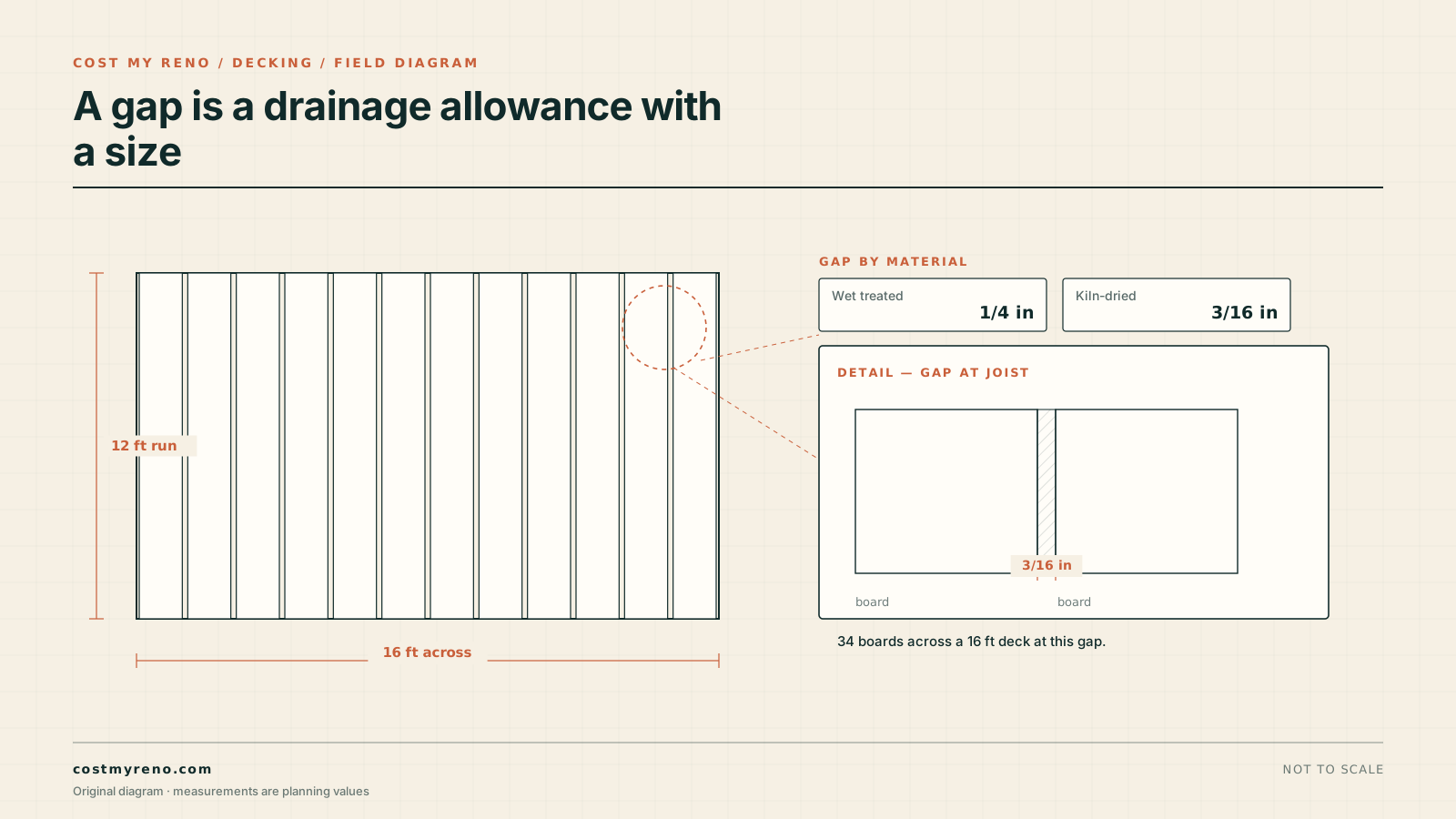 8 min read · Decking
Deck Board Spacing: Gaps That Drain, Dry, and Stay Even
Set board gaps by material and moisture content, then calculate board count from the finished deck width instead of guessing.
Read guide →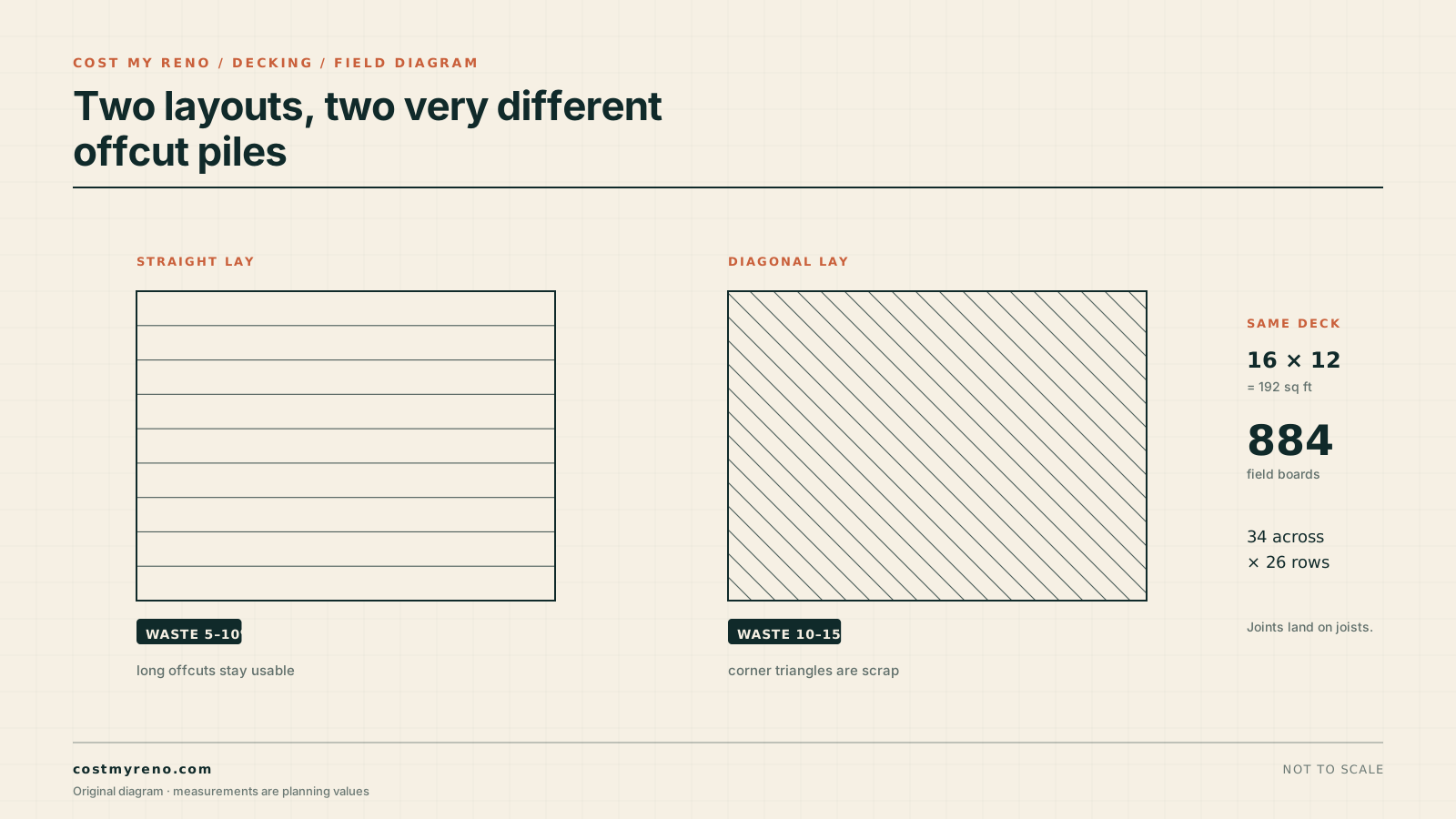 8 min read · Decking
Deck Board Waste and Layout: Where the Extra 10 Percent Goes
Price a deck by board length and layout, not just square footage, and see why diagonal runs and picture frames change the waste factor.
Read guide →Remodeling
2 field guides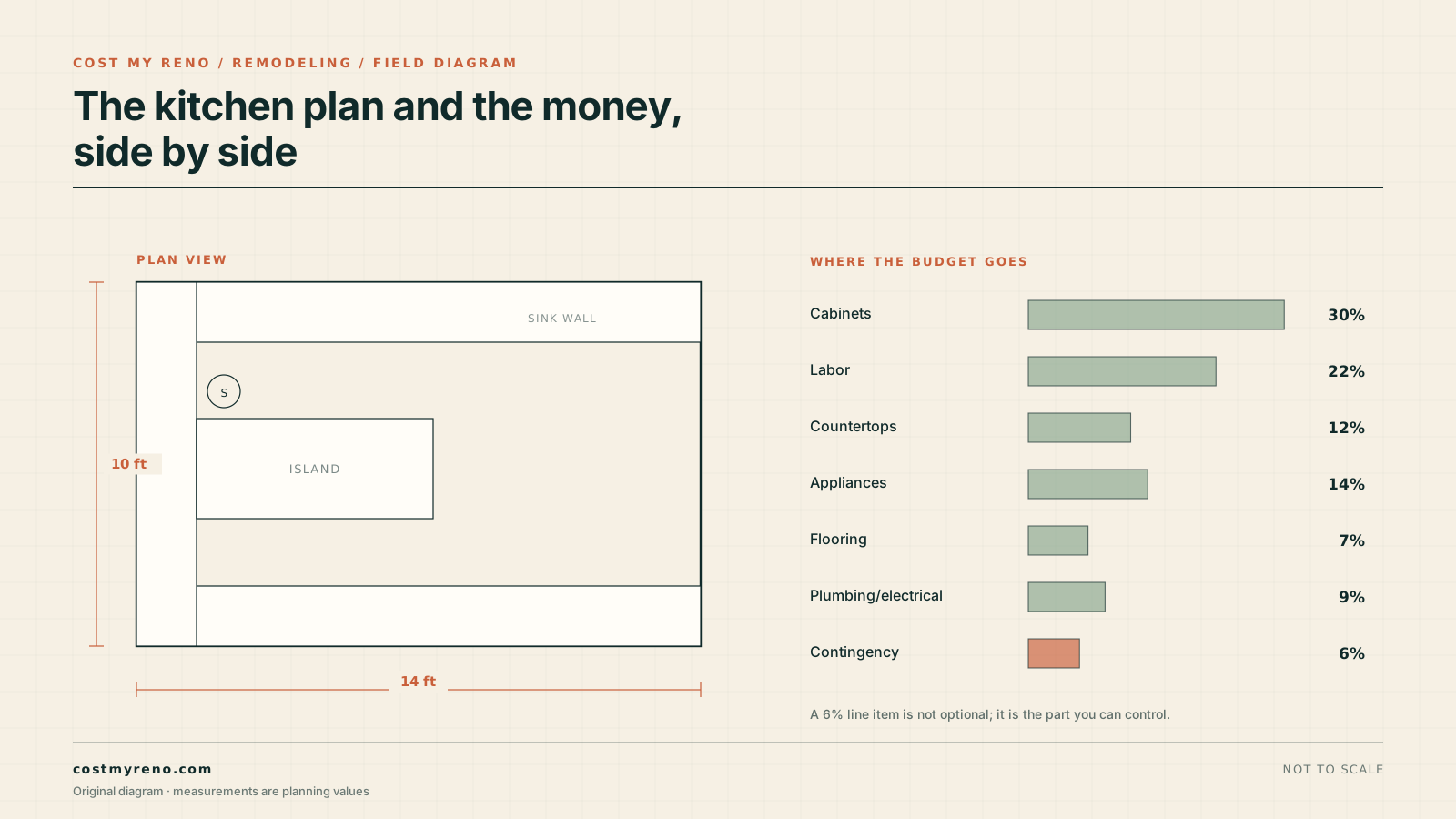 8 min read · Remodeling
Kitchen Remodel Budget Breakdown: A Line-Item Method
Build a 2026 kitchen budget from eleven line items, with realistic bands for a cosmetic refresh, a mid-range replacement, and a layout-changing gut remodel.
Read guide →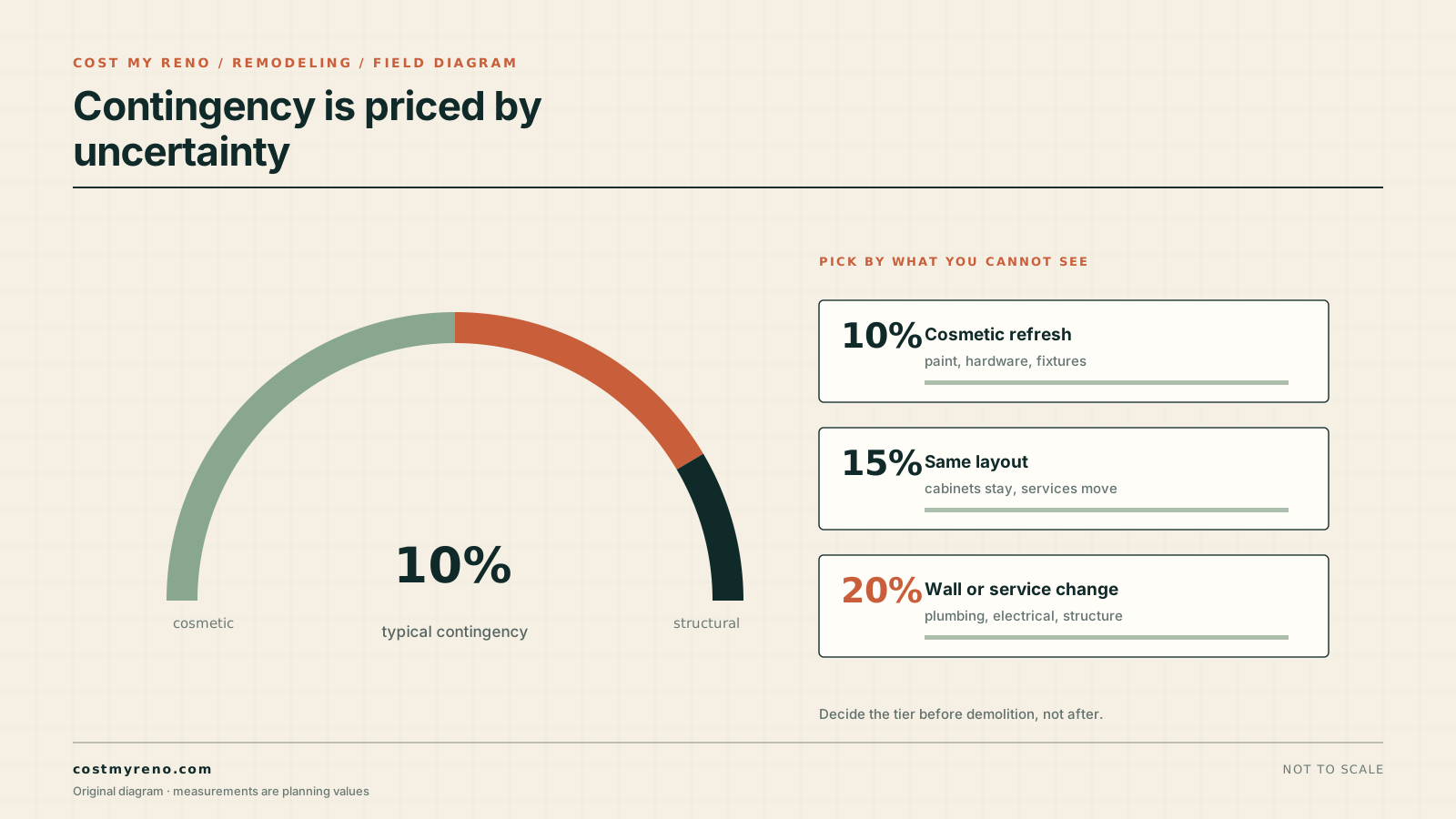 7 min read · Remodeling
Kitchen Remodel Contingency: How Much to Hold and How to Spend It
Size a 2026 kitchen reserve by risk, separate it from allowances and upgrades, and control draws with written change orders and a weekly three-number ledger.
Read guide →Planning
1 field guide 9 min read · Planning